Seeing the Archive as a Living Network: An Archivist’s Perspective on the Tutankhamun Archive
Working with the Tutankhamun archive is not simply about consulting historical records. For Felicity Crowe, an archivist at the Griffith Institute, it involves understanding how a large and complex body of material is organised, how its parts relate to one another, and how those relationships affect interpretation.
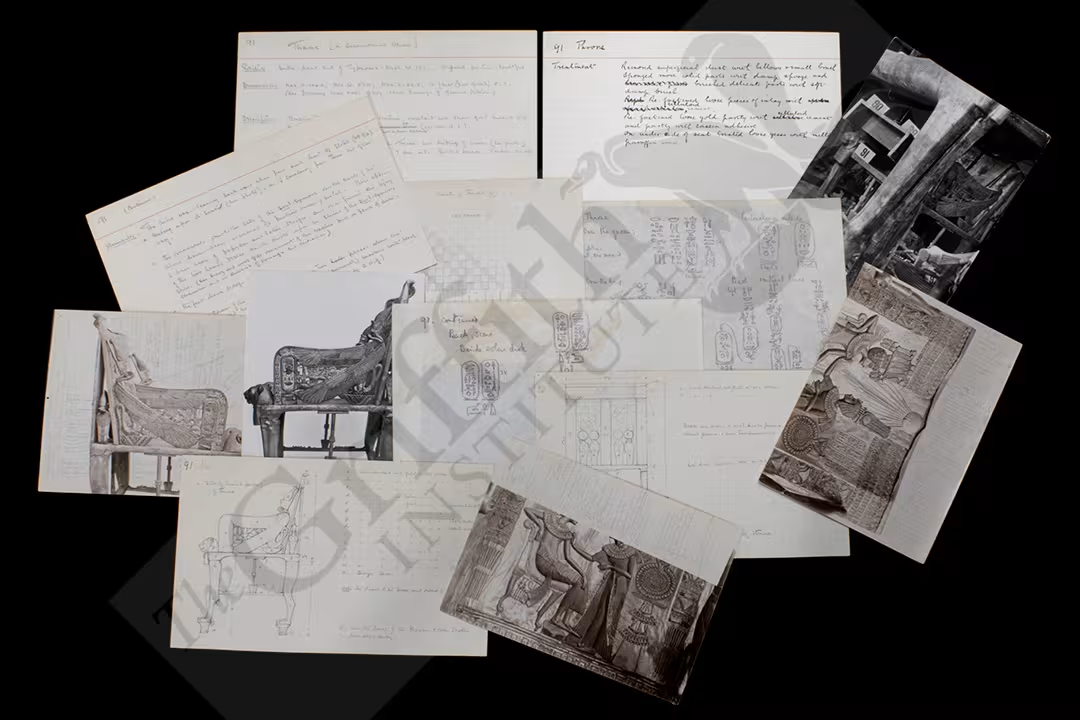
From an archival point of view, the Tutankhamun material forms a coherent archive rather than a loose collection of historical documents. The records were created through the routine work of an excavation and its participants. Diaries, photographs, object cards, correspondence, and informal notes were produced for practical purposes, not for later audiences. As a result, they preserve working processes, decisions, and personal exchanges that are often absent from formal historical accounts.
This mixture of formal documentation and everyday material is characteristic of archives and is central to how the Tutankhamun archive can be used and understood.
“An archive often contains the unofficial narratives behind the scenes, not just the official story.”
Why structure and context matter
A key principle of archival work is that individual records rarely make sense on their own. Unlike a library book, which is intended to be read independently, many archival items are fragmentary or minimal in content. A brief note, a list of numbers, or a scrap of paper may appear insignificant when viewed in isolation.
“A catalogue item can be completely meaningless without its context.” - Felicity Crowe
Meaning emerges when a record is seen within its archival structure. Knowing which box, series, or group a document belongs to shows how information was organised and what criteria were used to group material together. This structure reflects how the archive’s creators understood their work and what they considered important. Archival hierarchy is therefore not simply a technical framework, but a source of information in its own right.
Provenance and working online
Questions of context and structure become particularly important in digital environments. When archival material is presented online, there is a risk that records appear as disconnected items, separated from the circumstances in which they were created and used.
Making provenance visible enables users to identify the source, custodial history, and documentation pathway of a record. By situating each item within its archival hierarchy, users can better understand how it connects to related collections or other materials. It also supports more critical engagement. Users can begin to ask why a document was written, who it was intended for, and why certain material was preserved while other material was not. These questions are central to archival interpretation and to understanding how historical narratives are formed.
“Almost every object in the Tutankhamun archive is exciting in its own right, often in completely unexpected ways.”
Translating archival practice into a digital archive
Presenting an archive digitally brings both limitations and opportunities. Physical archives convey information through material qualities such as size, format, and condition, which can be difficult to communicate through digitisation. A small notebook and a large atlas may appear similar on screen, despite functioning very differently in practice.
At the same time, digital platforms allow relationships between records to be made visible in new ways. Materials that would previously have been consulted separately can be linked directly. Photographs, diaries, and object records can be viewed together, supporting a more integrated understanding of the archive.
These principles underpin the design of the Tutankhamun Spatial Archive. The site has been developed to reflect archival structure rather than flatten it. Records are presented in relation to one another, and users are able to see how individual items sit within broader groups and series. This approach supports both detailed research and general exploration, without assuming knowledge of archival systems.
Discovery beyond keyword searching
While keyword searching is useful, it relies heavily on catalogue descriptions and prior expectations about relevant terminology. Archival research, however, often depends as much on exploratory browsing within the archival hierarchy and on serendipitous encounters as on retrieving items through a predefined search term.
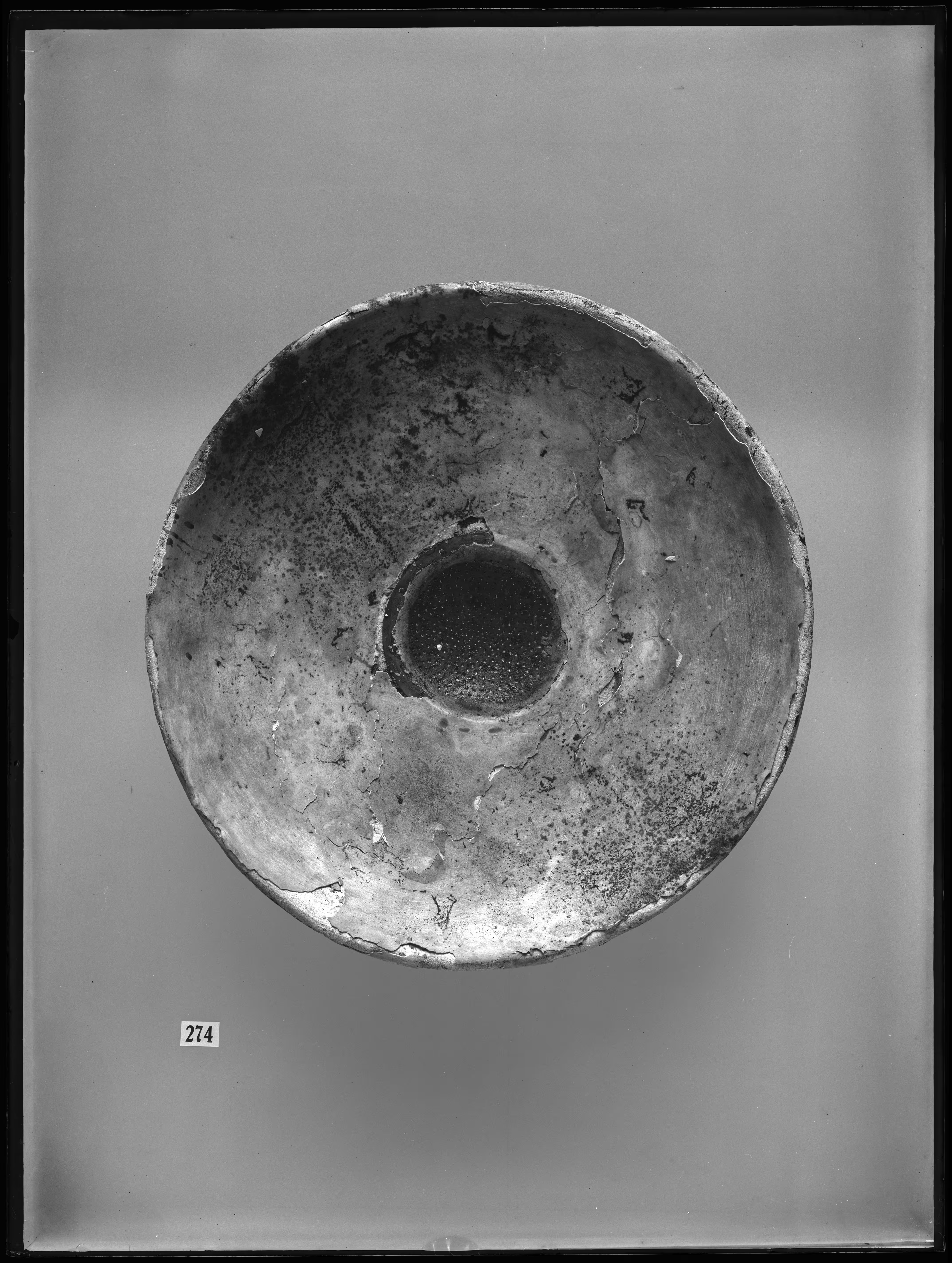
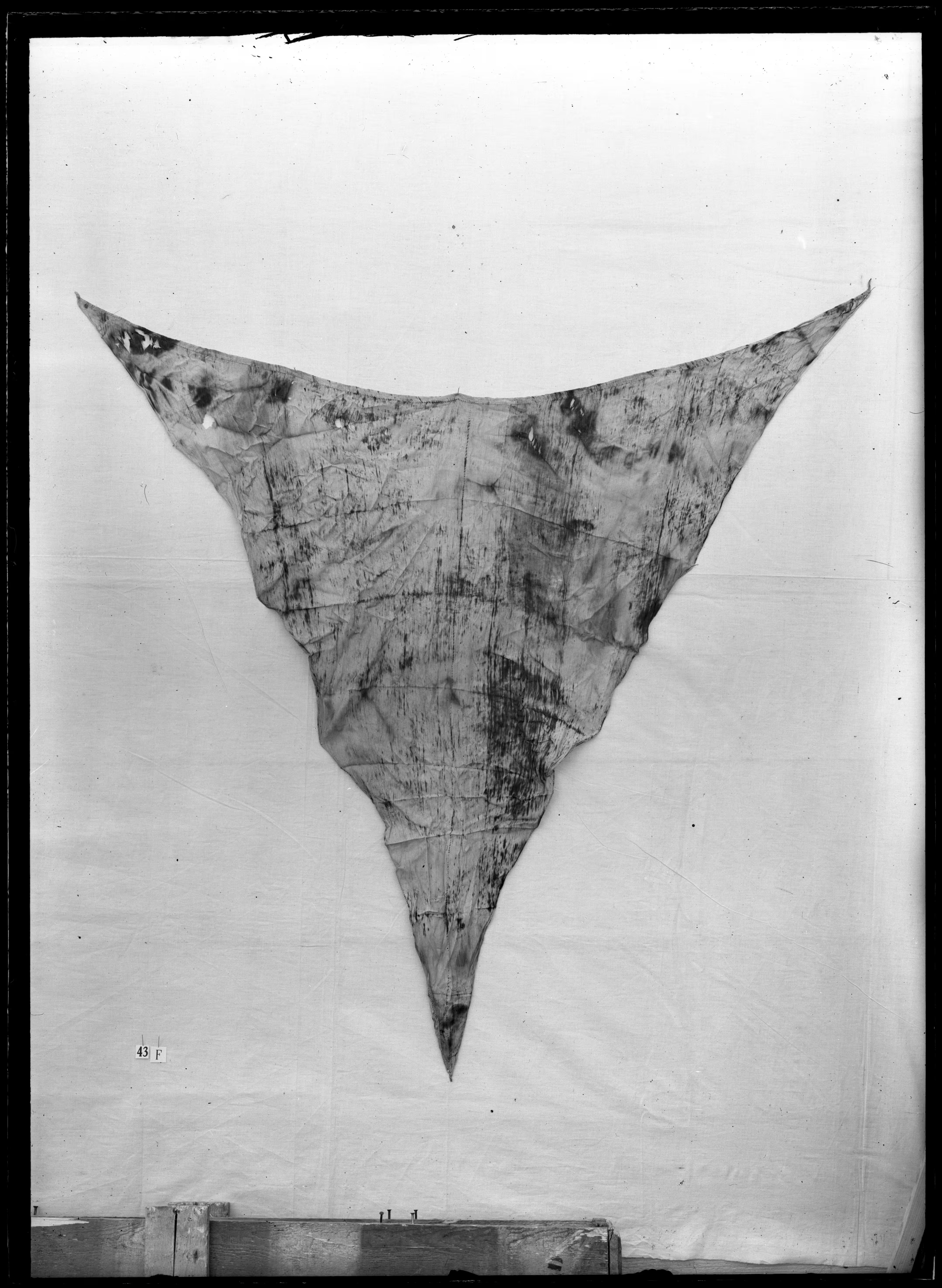
One example is a simple colander. It is not a prominent or visually dramatic object, but it is carefully made and well documented. Encountering an item like this alongside more familiar material draws attention to the range of objects present in the tomb and to aspects of daily life that are easy to overlook. It also illustrates the value of being able to move through the archive without a fixed destination.

Carter No. 054j - Aragonite wine strainer
Design, clarity, and use
Design plays an important role in how digital archives are used. Even high-quality digitisation can be difficult to engage with if navigation is unclear or interfaces are overly complex. Clear structure, straightforward navigation, and visual consistency make it easier for users to orient themselves within the archive.
For an archivist, this is not simply a matter of presentation. When users can move easily between records and understand how material is organised, they are more likely to spend time with the archive, follow connections between records, and develop informed questions.
What success looks like
From an archival perspective, success is not defined solely by how many people visit the site. It is reflected in how users engage with the material and whether they come away with a clearer sense of the archive as a structured body of records rather than a set of isolated images.
The Tutankhamun archive includes material that ranges from well known objects to small, personal, and practical records. By making this material accessible while retaining its context and structure, the Tutankhamun Spatial Archive supports a more accurate and transparent understanding of how the archive was created and how it can be used today.
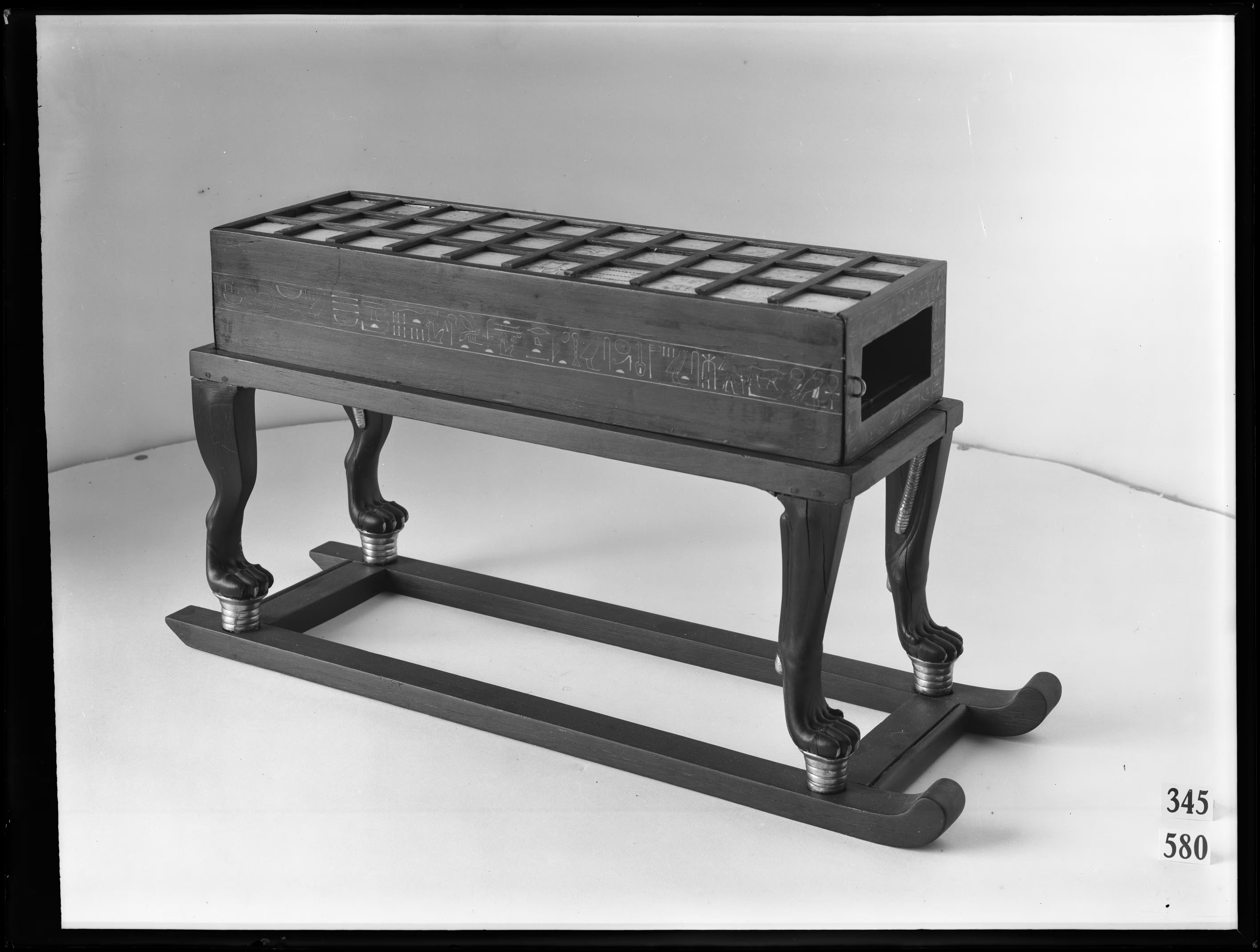
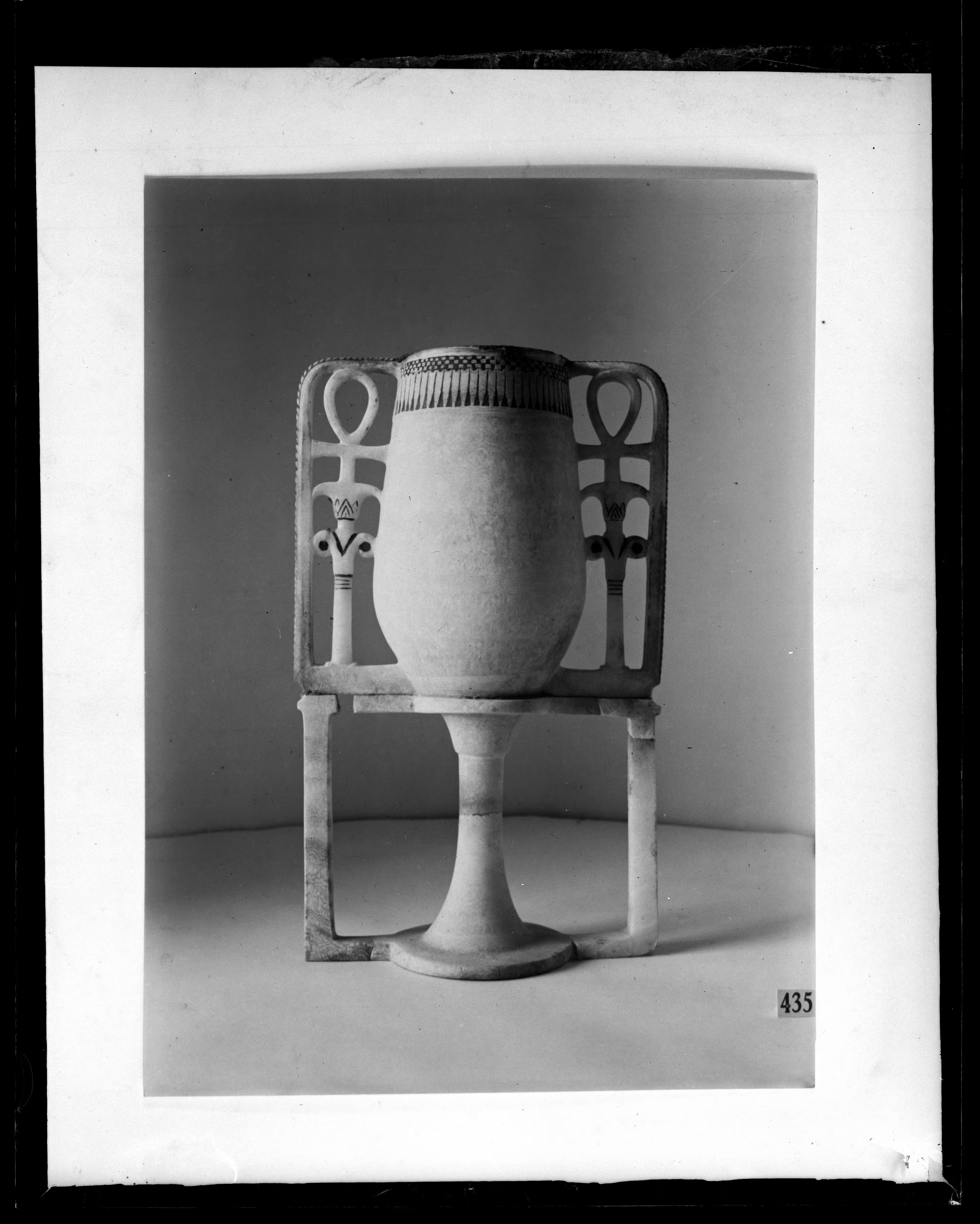
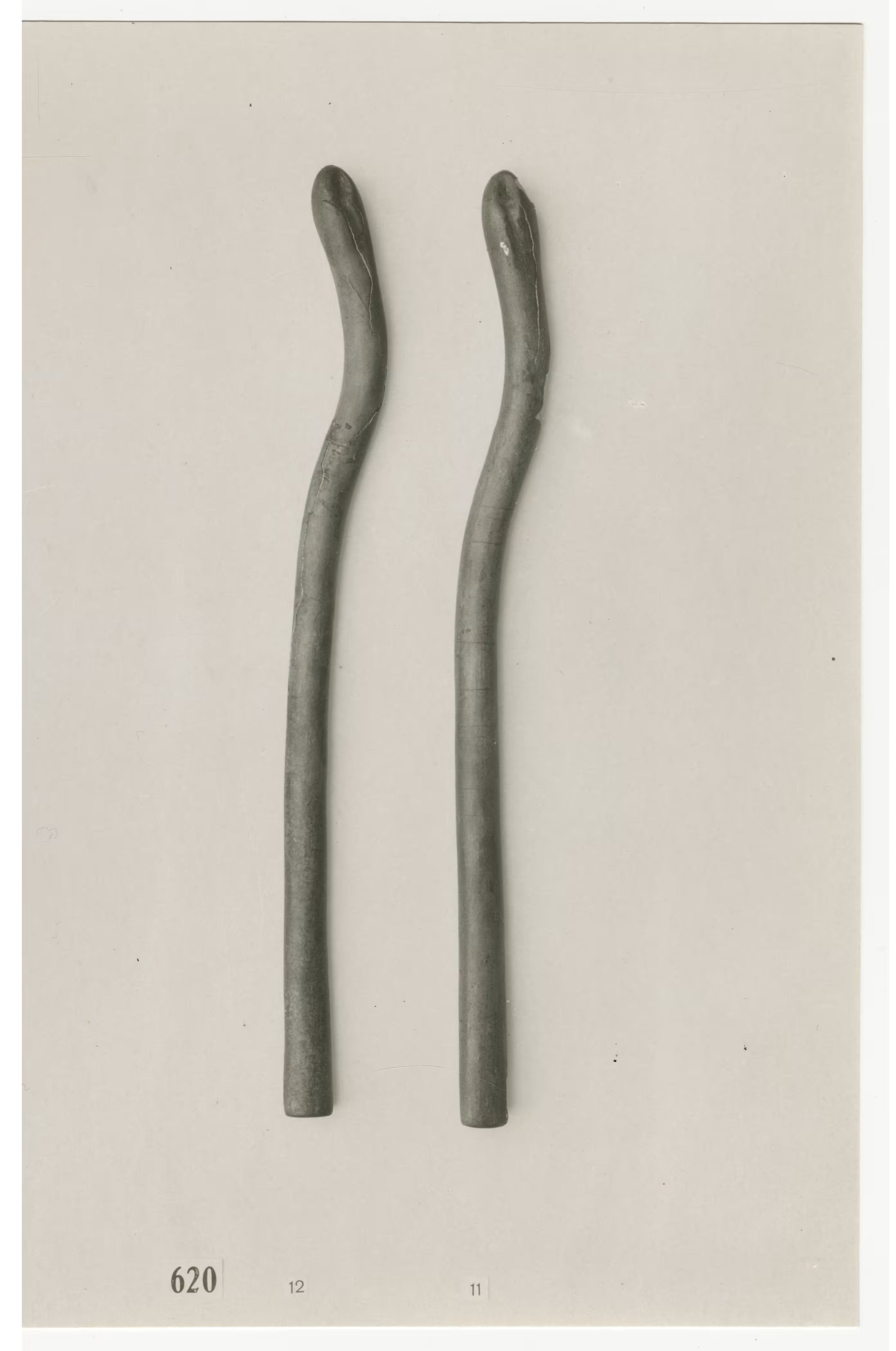
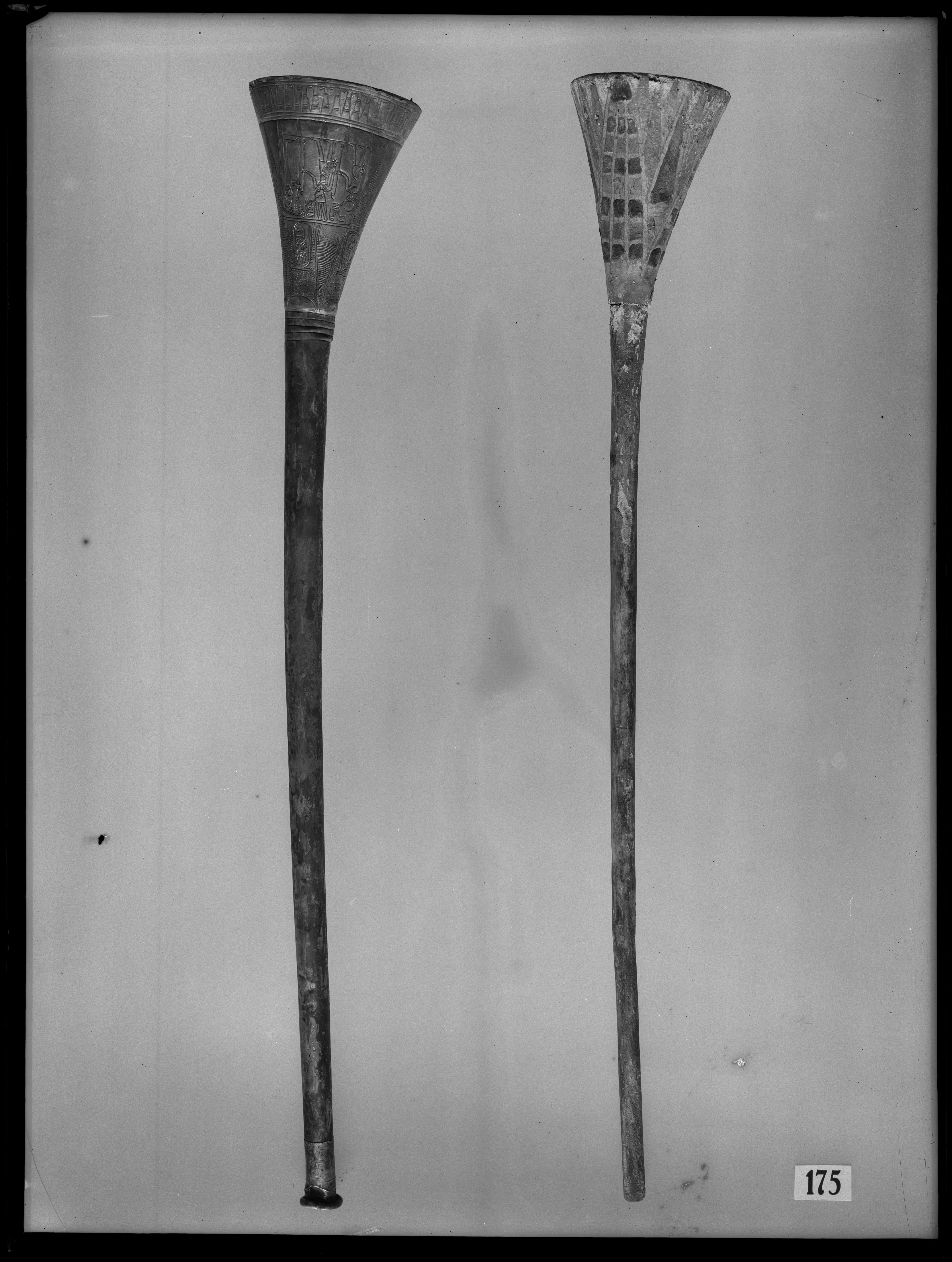
Overlooked Objects
Archivist - Felicity Crowe
Interviewer and writer - Lara Bampfield
How to cite
Felicity Crowe and Lara Bampfield, Seeing the Archive as a Living Network: An Archivist’s Perspective on the Tutankhamun Archive, Griffith Institute, 22 January 2026 URL