TAA i.3.7.1
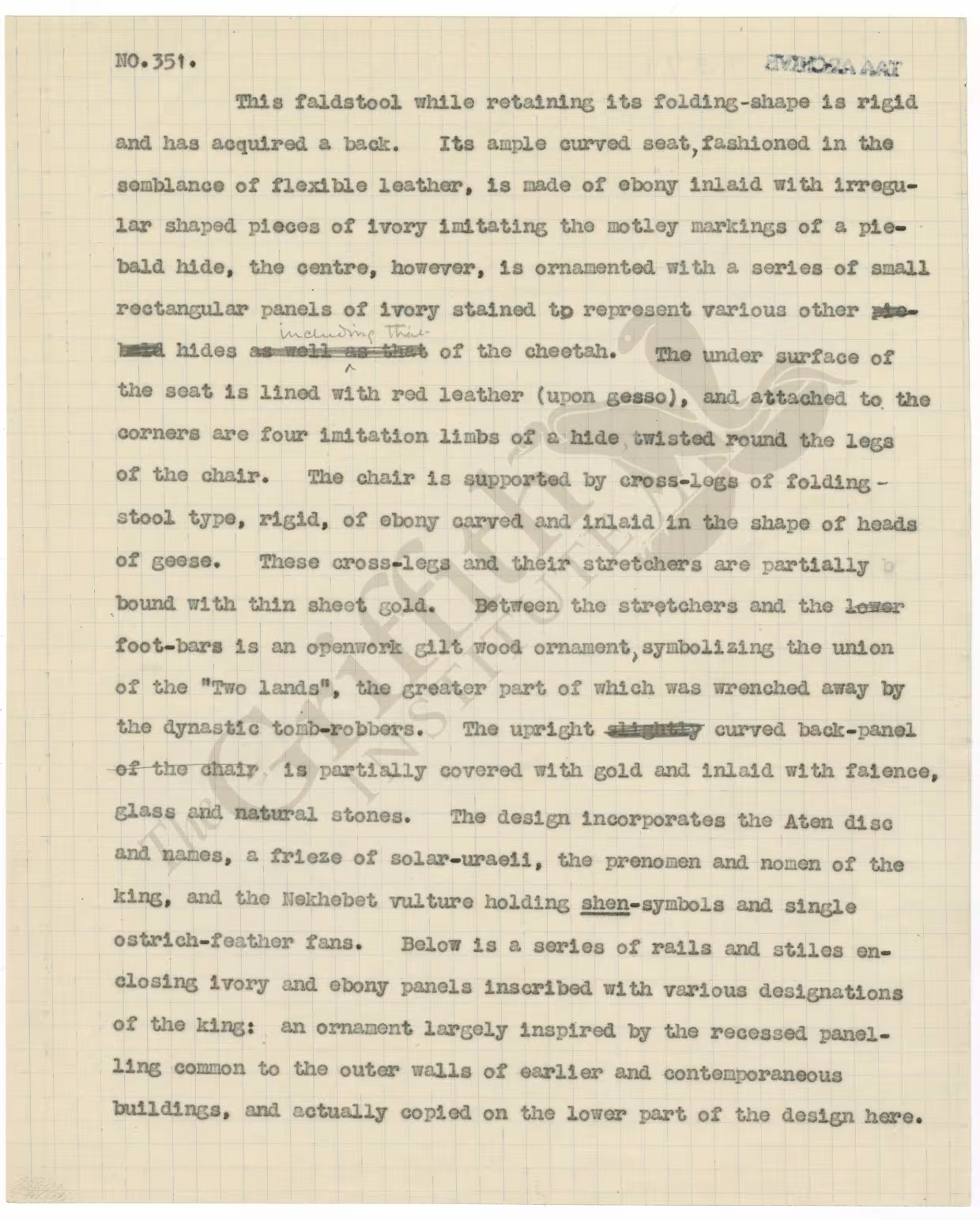
Typewritten and annotated notes on the chair (carbon copy of originals filed with object cards for 351).
© Griffith Institute,
University of Oxford
NO.351.
This faldstool while retaining its folding-shape is rigid
and has acquired a back. Its ample curved seat, fashioned in the
semblance of flexible leather, is made of ebony inlaid with irregu-
lar shaped pieces of ivory imitating the motley markings of a pie-
bald hide, the centre, however, is ornamented with a series of small
rectangular panels of ivory stained tp/<o> represent various other pie-
bald hides as well as that/<including that> of the cheetah. The under surface of
the seat is lined with red leather (upon gesso), and attached to the
corners are four imitation limbs of a hide twisted round the legs
of the chair. The chair is supported by cross-legs of folding –
stool type, rigid, of ebony carved and inlaid in the shape of heads
of geese. These cross-legs and their stretchers are partially bsic
bound with thin sheet gold. Between the stretchers and the lower
foot-bars is an openwork gilt wood ornament, symbolizing the union
of the “Two lands”, the greater part of which was wrenched away by
the dynastic tomb-robbers. The upright slightly curved back-panel
of the chair, is partially covered with gold and inlaid with faience,
glass and natural stones. The design incorporates the Aten disc
and names, a frieze of solar-uraeiisic, the prenomen and nomen of the
king, and the Nekhebet vulture holding shen-symbols and single
ostrich-feather fans. Below is a series of rails and stiles en-
closing ivory and ebony panels inscribed with various designations
of the king: an ornament largely inspired by the recessed panel-
ling common to the outer walls of earlier and contemporaneous
buildings, and actually copied on the lower part of the design here.