TAA i.3.5.3
Typewritten and annotated report on the canopic equipment, page 3.
© Griffith Institute,
University of Oxford
(3)
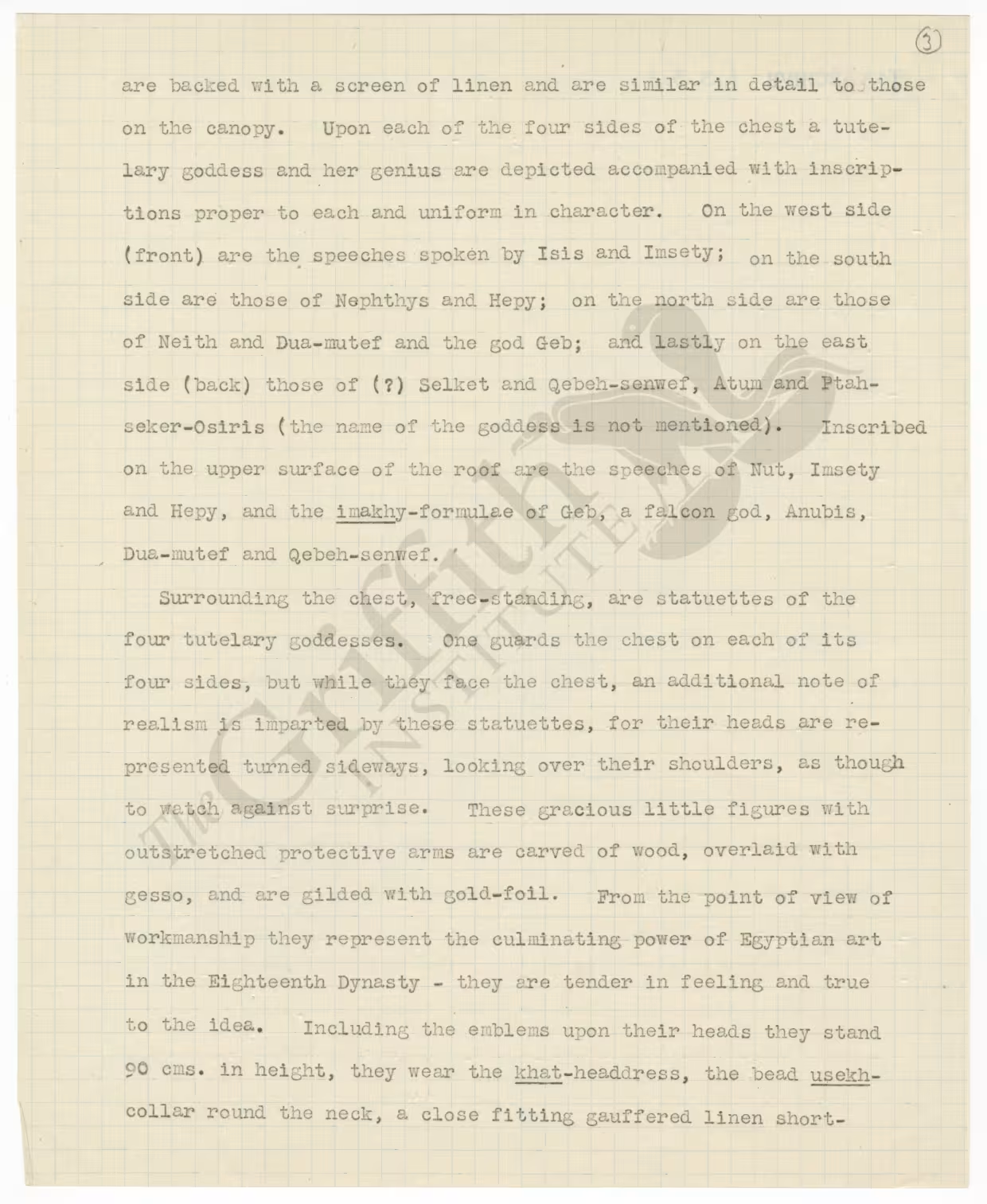
are backed with a screen of linen and are similar in detail to those
on the canopy. Upon each of the four sides of the chest a tute-
lary goddess and her genius are depicted accompanied with inscrip-
tions proper to each and uniform in character. On the west side
(front) are the speeches spoken by Isis and Imsety; on the south
side are those of Nephthys and Hepy; on the north side are those
of Neith and Dua-mutef and the god Geb; and lastly on the east
side (back) those of (?) Selket and Qebeh-senwef, Atum and Ptah-
seker-Osiris (the name of the goddess is not mentioned). Inscribed
on the upper surface of the roof are the speeches of Nut, Imsety
and Hepy, and the imakhy-formulae of Geb, a falcon god, Anubis,
Dua-mutef and Qebeh-senwef.
Surrounding the chest, free-standing, are statuettes of the
four tutelary goddesses. One guards the chest on each of its
four sides, but while they face the chest, an additional note of
realism is imparted by these statuettes, for their heads are re-
presented turned sideways, looking over their shoulders, as though
to watch against surprise. These gracious little figures with
outstretched protective arms are carved of wood, overlaid with
gesso, and are gilded with gold-foil. From the point of view of
workmanship they represent the culminating power of Egyptian art
in the Eighteenth Dynasty – they are tender in feeling and true
to the idea. Including the emblems upon their heads they stand
90 cms. in height, they wear the khat-headdress, the bead usekh-
collar round the neck, a close fitting gauffered linen short-