
TAA i.3.2.4
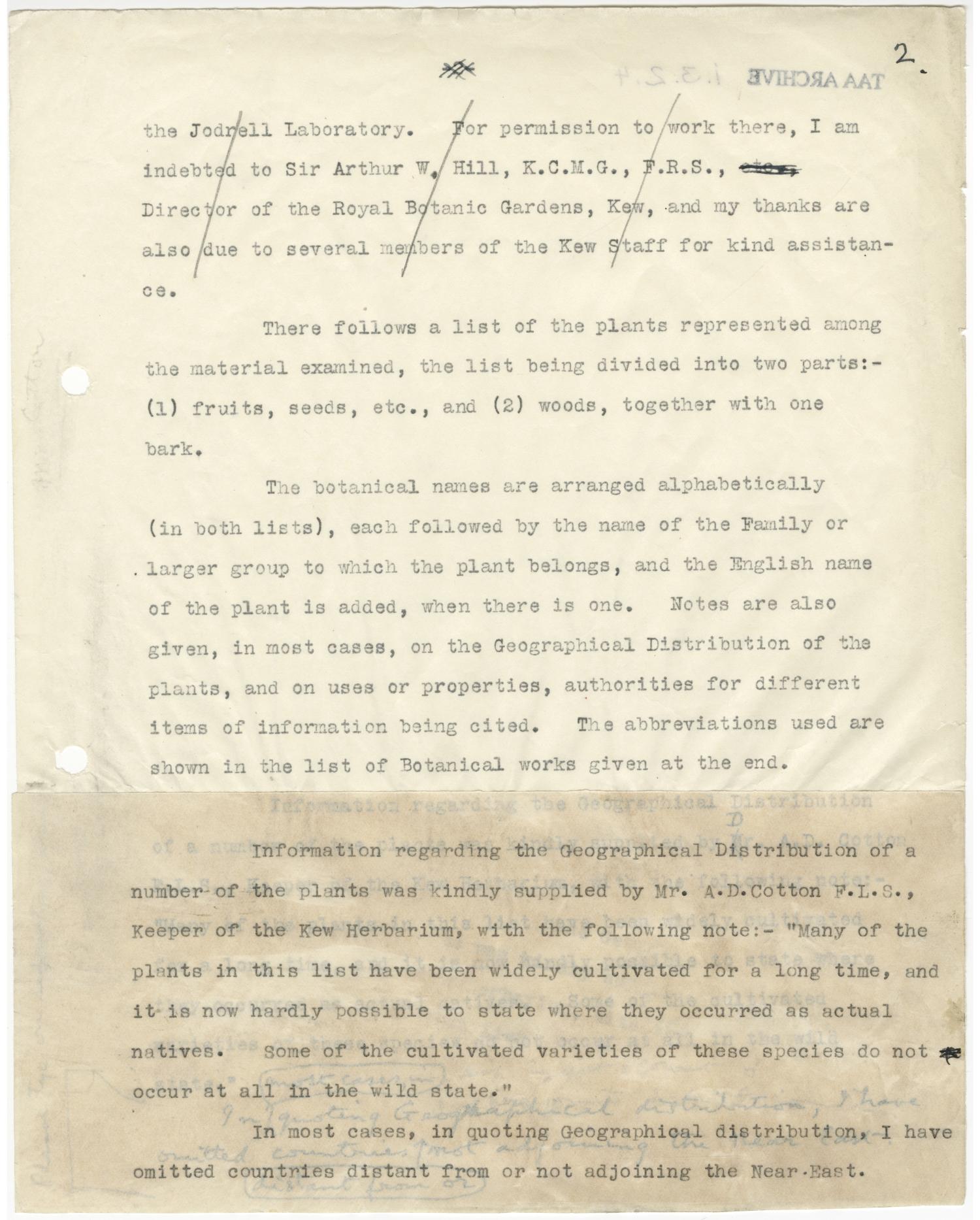
Typewritten and annotated report on botanical remains, page 2. An additional piece of paper has been glued to the bottom paragraph, replacing the original text underneath. Sir Arthur Hill, Mr. A. D. Cotton and the staff at Kew are also mentioned on this page.
The whole text or part of the text is fully struck through on this page but is not indicated in the transcription. On this page, strikethrough formatting is reserved for the author’s edits and deletions within the main body of the text, which would otherwise be difficult to distinguish.

© Griffith Institute,
University of Oxford
- 2 - 1.
the Jodrell Laboratory. For permission to work there, I am
indebted to Sir Arthur W. Hill, K.C.M.G., F.R.S., etc.,
Director of the Royal Botanic Gardens, Kew, and my thanks are
also due to several members of the Kew staff for kind assistan-
ce.
There follows a list of the plants represented among
the material examined, the list being divided into two parts:-
(1) fruits, seeds, etc., and (2) woods, together with one
bark.
The botanical names are arranged alphabetically
(in both lists), each followed by the name of the Family or
larger group to which the plant belongs, and the English name
of the plant is added, when there is one. Notes are also
given, in most cases, on the Geographical Distribution of the
plants, and on uses or properties, authorities for different
items of information being cited. The abbreviations used are
shown in the list of Botanical works given at the end.
Information regarding the Geographical Distribution of a
number of the plants was kindly supplied by Mr. A. D. Cotton F.L.S.,
Keeper of the Kew Herbarium, with the following note:- "Many of the
plants in this list have been widely cultivated for a long time, and
it is now hardly possible to state where they occurred with as actual
natives. Some of the cultivated varieties of these species do not x[?]
occur at all in the wild state."
In most cases, in quoting Geographical distribution, I have
omitted countries distant from or not adjoining the Near East.