
TAA i.3.8.39
Handwritten and annotated notes on chariots, page 3 (for typewritten copy, see TAA i.3.8.18-19).
© Griffith Institute,
University of Oxford
(3)
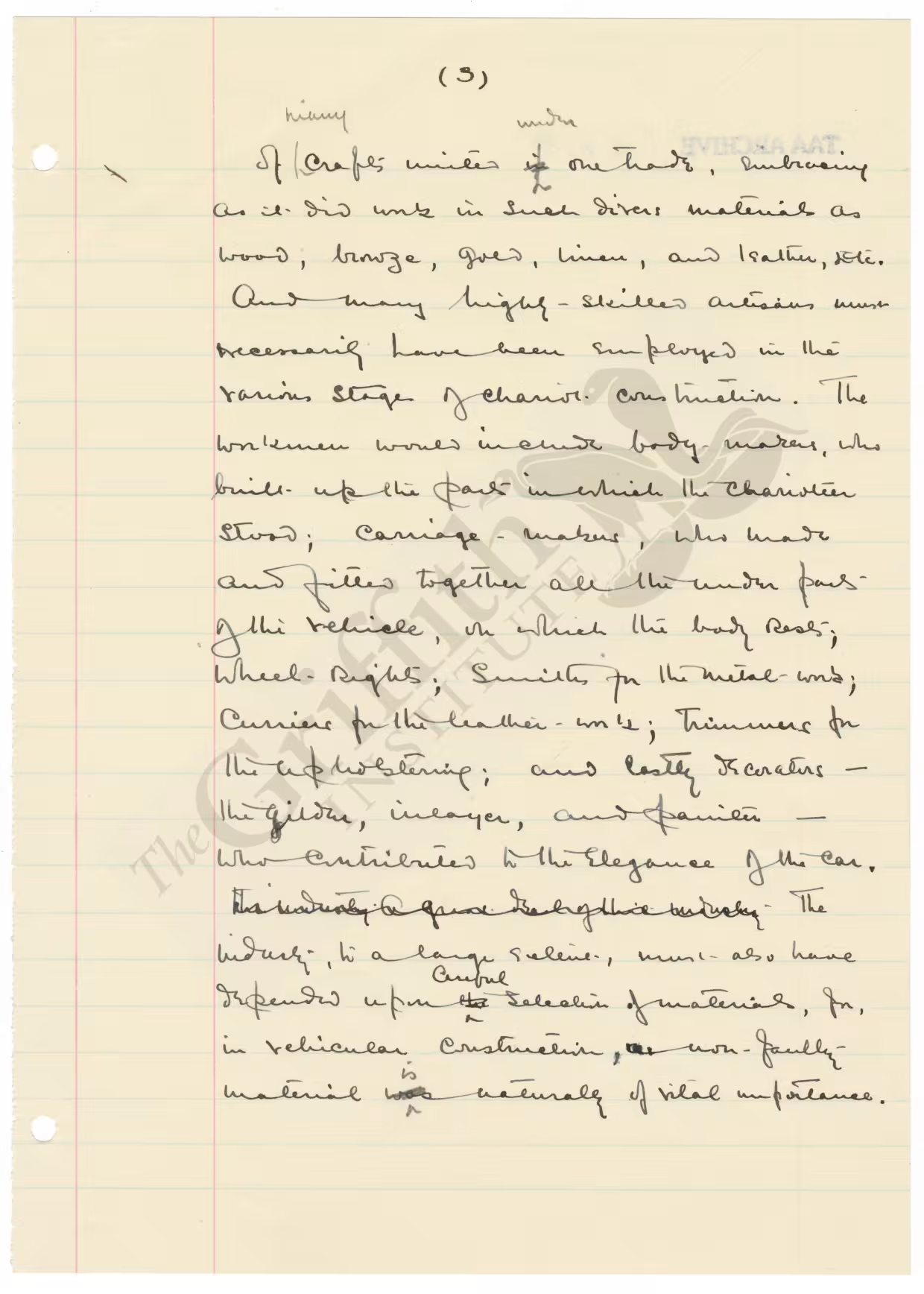
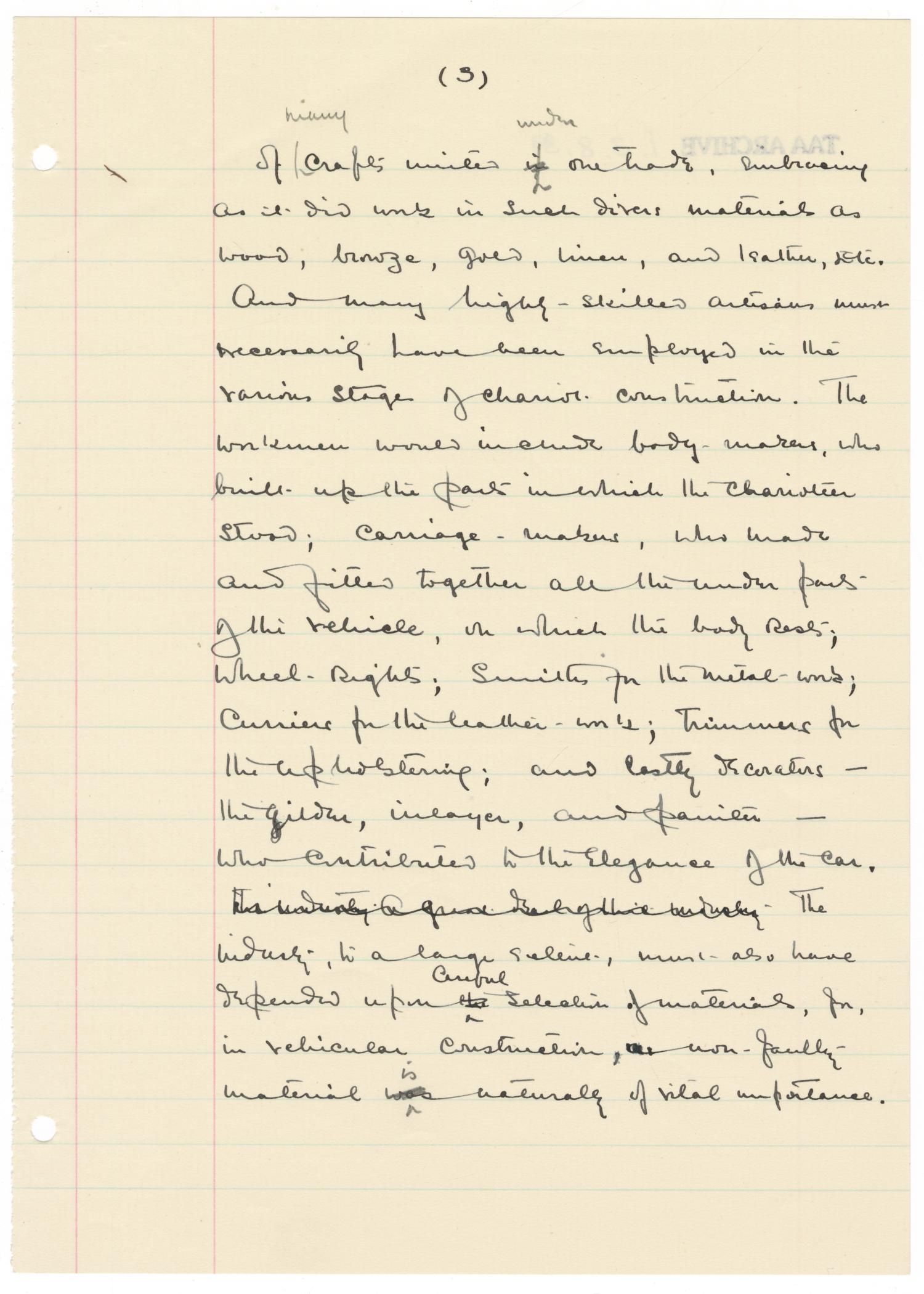
of <many> crafts in/<under> one trade, embracing
as it did work in such divers materials as
wood, bronze, gold, linen, and leather, etc.
And many highly-skilled artisans must
necessarily have been employed in the
various stages of chariot construction. The
workmen would include body-makers, who
built up the parts in which the charioteer
stood; carriage-makers, who made
and fitted together all the under parts
of the vehicle, on which the body rests;
wheel-rightssic; smiths for the metal-work;
curriers for the leather-work; trimmers for
the upholstering; and lastly decorators –
the gilder, inlayer, and painter –
who contributed to the elegance of the car.The industry A great deal of the industry The
industry, to a large extent, must also have
depended upon the/<careful> selection of materials, for,
in vehicular construction, x[?]non-faulty
material was/<is> naturally of vital importance.